


It happens when you least expect it. Maybe you were enjoying a quiet evening snack at Sukhna Lake, biting into a crisp apple, or perhaps you were savoring a meal at a favorite spot in Sector 17 when—crack. A sudden jolt of pain, a jagged edge against your tongue, and the sinking feeling that your tooth just broke.
For many Chandigarh residents, this moment brings immediate anxiety. Will it hurt to fix? Will I need a root canal? Is it going to look fake? And the most confusing question of all: Do I just need a filling, or do I need a “cap”?
At Orange Dental Clinic, we understand that dental jargon can be confusing. That’s why we believe in clear, honest communication. If you are dealing with a broken, weak, or heavily decayed tooth, a dental crown might be the hero your smile needs. Let’s break down exactly what a crown is, when you need one, and why modern technology makes getting one easier than ever.
What Exactly Are Dental Crowns?
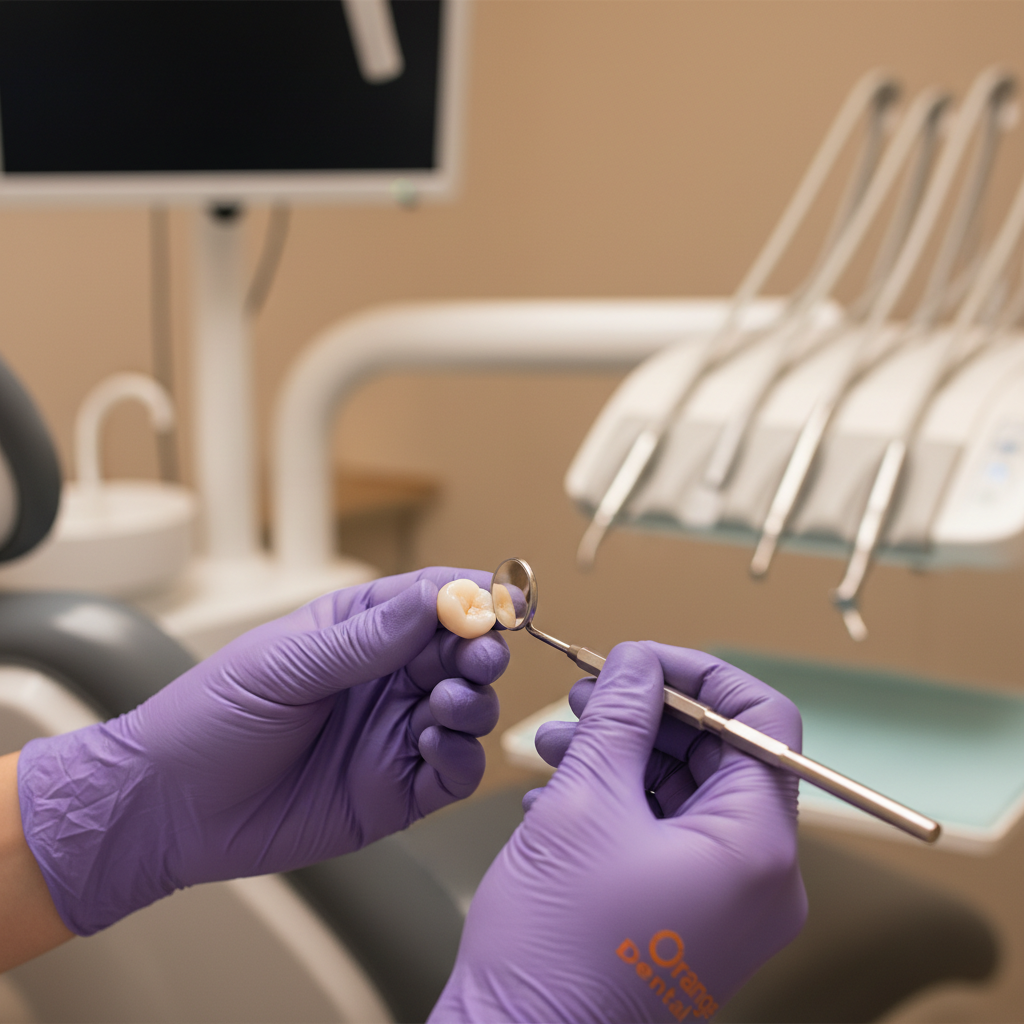
Think of a dental crown as a custom-fitted “helmet” for your tooth. Unlike a filling, which just patches a small hole, a crown covers the entire visible portion of the tooth down to the gum line.
When a tooth is damaged, it loses its structural integrity. Chewing forces can cause it to crack further or split entirely. A tooth cap treatment restores the tooth’s shape, size, strength, and appearance. It holds the compromised tooth structure together, allowing you to chew comfortably and smile confidently without fear of the tooth breaking apart.
5 Clear Signs You Might Need a Dental Crown
While only a professional exam can give you a definitive answer, here are five common signs that a crown might be in your future:
- You Have a Large Cavity: If a cavity covers more than half the width of the tooth, the remaining natural structure is too weak to hold a large filling. A crown protects what’s left of the tooth.
- You’ve Had a Root Canal: After root canal treatment, the tooth becomes brittle because the blood supply has been removed. A crown is almost always necessary to prevent the now-hollow tooth from fracturing.
- Cracked or Broken Tooth: If you have “Cracked Tooth Syndrome” or a visible break, a crown for broken tooth acts as a splint, holding the pieces together and stopping the pain caused by chewing.
- Severe Wear and Tear: Chandigarh’s lifestyle can be stressful, leading many to grind their teeth (bruxism) at night. Over time, this wears teeth down to stubs. Crowns can restore their original height and function.
- Cosmetic Improvement: Sometimes, a tooth is healthy but severely discolored or misshapen. A crown can provide an instant smile makeover by covering the imperfection entirely.
The Crown Procedure Demystified: What to Expect
Many patients fear that getting a crown is a long, painful ordeal. In reality, with modern anesthesia and our gentle approach, the procedure is straightforward and virtually painless.
The Traditional Two-Visit Process
- Visit 1: Preparation. We numb the area completely so you feel no pain. Any decay is removed, and the tooth is shaped to fit the crown. We take precise impressions and place a temporary crown to protect your tooth while the permanent one is crafted.
- Visit 2: Placement. About a week or two later, you return to have the temporary crown removed. We check the fit, color, and bite of your new permanent crown before cementing it in place.
The Orange Dental Clinic Advantage: CEREC Technology
We know your time is valuable. That’s why we invest in advanced CEREC technology. For eligible candidates, we can design, mill, and place a high-quality ceramic crown in a single visit, saving you time and the hassle of a temporary cap.
Material Options Available in Chandigarh
Not all crowns are created equal. The “best” material depends on which tooth needs the crown (front vs. back) and your budget.
- Zirconia: The superhero of dental materials. It is incredibly strong and durable, making it perfect for back teeth that do the heavy lifting of chewing. It is also tooth-colored, blending well with your smile.
- E-Max (Lithium Disilicate): Known for its superior aesthetics. It mimics the translucency of natural enamel perfectly, making it the top choice for front teeth where looks matter most.
- Porcelain-Fused-to-Metal (PFM): A classic choice that combines the strength of metal with a porcelain coating. While durable, they can sometimes show a dark line at the gum level over time.
- Gold/Metal Alloys: While less common for cosmetic reasons, gold crowns are exceptionally durable and gentle on opposing teeth. They are often used for back molars where they aren’t visible.
Comparing Your Options: Crown vs. Filling vs. Veneer
Confused about which restoration is right for you? Here is a quick comparison:
| Feature | Dental Filling | Dental Veneer | Dental Crown |
| Primary Use | Small to medium cavities | Cosmetic issues (chips, stains) on front teeth | Severely damaged, weak, or decayed teeth |
| Coverage | Fills a hole inside the tooth | Covers only the front surface | Covers the entire tooth like a cap |
| Structural Support | Low (can weaken tooth if too large) | Low (aesthetic only) | High (reinforces and strengthens) |
| Durability | 5-10 years | 10-15 years | 10-15+ years (often longer) |
Common Myths vs. Facts About Dental Crowns
Myth: “Crowns always look fake.”
Fact: Modern materials like E-max and Zirconia are designed to match the shade and translucency of your natural teeth perfectly. Most people won’t be able to tell which tooth is crowned!
Myth: “The procedure is excruciating.”
Fact: It’s no more painful than getting a filling. We use effective local anesthesia, and for anxious patients, we offer sedation options to ensure a comfortable experience.
Myth: “I can wait to get a crown.”
Fact: Delaying treatment on a compromised tooth is a gamble. A cracked tooth can split further, reaching the root. Once that happens, the tooth cannot be saved and will require extraction and replacement with dental implants.
Frequently Asked Questions About Dental Crowns
Q. What’s the difference between a filling and a crown?
A filling patches a small area of decay. A crown covers the entire tooth to hold it together when there isn’t enough healthy tooth structure left to support a filling.
Q. How long does a dental crown last in Chandigarh’s climate?
Climate doesn’t affect crowns, but diet does! With good oral hygiene and avoiding chewing ice or hard candies, a crown typically lasts 10-15 years.
Q. Will people notice I have a crown?
No. We match the color, shape, and size to your adjacent teeth so it blends seamlessly.
Q. How do I care for my new crown?
Treat it like a natural tooth! Brush twice a day, floss daily (paying attention to the gum line), and keep up with your dental checkup package.
Q. Are there food restrictions after getting a crown?
Immediately after placement, avoid sticky or hard foods for 24 hours while the cement sets. Long-term, avoid using your crowned tooth as a tool to open packages or crack nuts.
Don’t Let a Damaged Tooth Ruin Your Smile
Ignoring a damaged tooth can lead to bigger, more expensive problems down the road, like emergency dental care for an infection or extraction. A dental crown is an investment in your health, comfort, and confidence.
If you are experiencing tooth pain or have been told you need a cap, don’t wait. Let us help you keep your smile whole.
Book Your Personal Crown Consultation at Our Sector 22, C Chandigarh Clinic

