


Medically Reviewed by: Dr. Ankita Dadwal, MDS (Periodontist & Implantologist), Orange Dental Clinic, Sector 22, Chandigarh — [Last Updated: 17 Sept,2026]
Quick Answer
A dental implant replaces a missing tooth’s root with a titanium post placed in the jawbone, topped with a custom crown once it fuses with the bone. At Orange Dental Clinic, implants are placed by Dr. Ankita Dadwal, a Periodontist & Implantologist with over 10 years of experience. Suitability depends on your jawbone health and gum condition, assessed during a consultation — cost varies by case, and a bone graft may be needed first if bone density is low.
Missing teeth don’t just affect your appearance — they can make it harder to chew, speak clearly, and keep your mouth clean. At Orange Dental Clinic in Chandigarh, we offer dental implants as a long-term, natural-looking solution for tooth loss.
What Are Dental Implants?
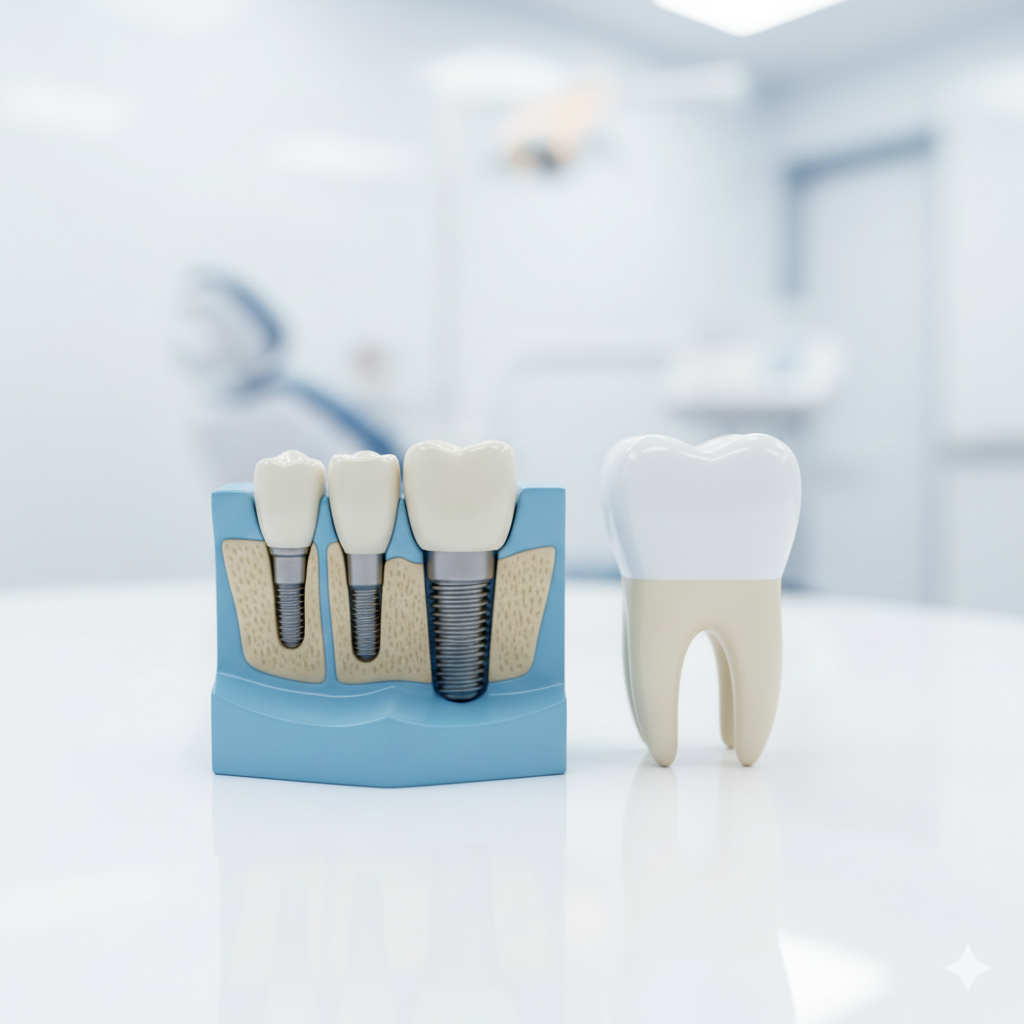
A dental implant is an artificial tooth root, made from biocompatible titanium, that’s placed into your jawbone. Once the implant fuses with the bone — a process called osseointegration — a custom-made crown is attached on top to restore the function and appearance of a natural tooth.
Unlike a dental bridge, an implant doesn’t rely on the teeth next to it for support, since it’s anchored directly into the bone.
Why Choose Dental Implants?
Dental implants are a well-established option for replacing missing teeth, for several reasons:
- Natural look and feel — the crown is custom-made to match the size, shape, and colour of your surrounding teeth.
- Long-term durability — with good oral hygiene and regular check-ups, implants can last many years, and often a lifetime.
- Restored function — eat, chew, and speak without the movement or restrictions that can come with removable dentures.
- Jawbone health — because an implant replaces the tooth root, it helps stimulate the jawbone in a way that a missing tooth or a removable denture doesn’t, which can help preserve bone density over time.
- No slipping or shifting — unlike removable dentures, an implant is fixed in place.
Whether you’re missing one tooth or several, a dental implant can help restore both function and appearance — your dentist will help you understand which option fits your specific case.
The Implant Process at Orange Dental Clinic
Here’s what to expect:
- Consultation and assessment. Dr. Ankita Dadwal evaluates your oral health and jawbone density using a clinical exam and imaging (X-ray or 3D scan).
- Surgical placement. The implant post is placed into the jawbone under local anaesthesia.
- Healing and integration. Over the following months, the implant fuses with the surrounding bone (osseointegration).
- Crown placement. Once healing is complete, a custom-made crown is attached to finish the restoration.
Throughout the process, our team keeps you informed about what’s happening and what to expect at each stage.
Are You a Candidate for Dental Implants?
Most healthy adults with good oral hygiene are candidates for dental implants — but it depends on a few things:
- Jawbone density. If there isn’t enough bone to support an implant, a bone graft may be recommended first, which adds time to the overall treatment.
- Gum health. Active or untreated gum disease typically needs to be addressed before implant placement.
- Certain health conditions. Factors like uncontrolled diabetes or heavy smoking can affect healing and implant success.
If an implant isn’t the right fit for your situation, your dentist will talk you through alternatives, such as a bridge or denture. A consultation — including a review of your dental and medical history — is the only reliable way to confirm candidacy.
(See also: Missing Teeth? Bridges vs. Implants Explained for a fuller comparison of your options.)
What Affects the Cost of Dental Implants?
Implant cost varies from patient to patient, depending on:
- Number of implants — a single tooth replacement costs less than a full-arch case.
- Bone grafting — if additional bone support is needed, this adds to the overall cost and timeline.
- Implant and crown material — different implant systems and crown materials are priced differently.
- Imaging requirements — some cases need 3D imaging for precise planning.
The only way to get an accurate cost is a consultation, since it depends entirely on your specific case.
Frequently Asked Questions
- Are dental implants painful to get? Implant placement is done under local anaesthesia, so you shouldn’t feel pain during the procedure. Most patients report less discomfort than they expected, and any soreness afterward is usually mild and short-lived.
- How long do dental implants last? With good oral hygiene and regular check-ups, implants can last many years, and often a lifetime. They have a high success rate in suitable candidates — your dentist will assess whether they’re right for you.
- Can I get an implant if I’ve lost bone in my jaw? Often, yes — bone grafting can rebuild the area enough to support an implant. This adds an extra step and some time to treatment, but it doesn’t rule out the option entirely.
- How is an implant different from a bridge or denture? An implant replaces the tooth root directly in the jawbone and doesn’t rely on neighbouring teeth for support, unlike a bridge. Unlike a removable denture, it’s fixed in place. Your dentist can help you weigh the right option for your case.
Why Orange Dental Clinic?
At Orange Dental Clinic, dental implants are placed by Dr. Ankita Dadwal, MDS (Periodontist & Implantologist), a Member of the Dental Council of India and the Indian Society of Periodontology, with over 10 years of experience in periodontal and implant care. As part of a multispeciality clinic with four in-house MDS specialists, you’re seen directly by the specialist trained for your treatment — no referral needed.
Take the First Step Toward a Complete Smile
If you’re ready to talk through your options for restoring your smile, book a consultation with Orange Dental Clinic today.
