
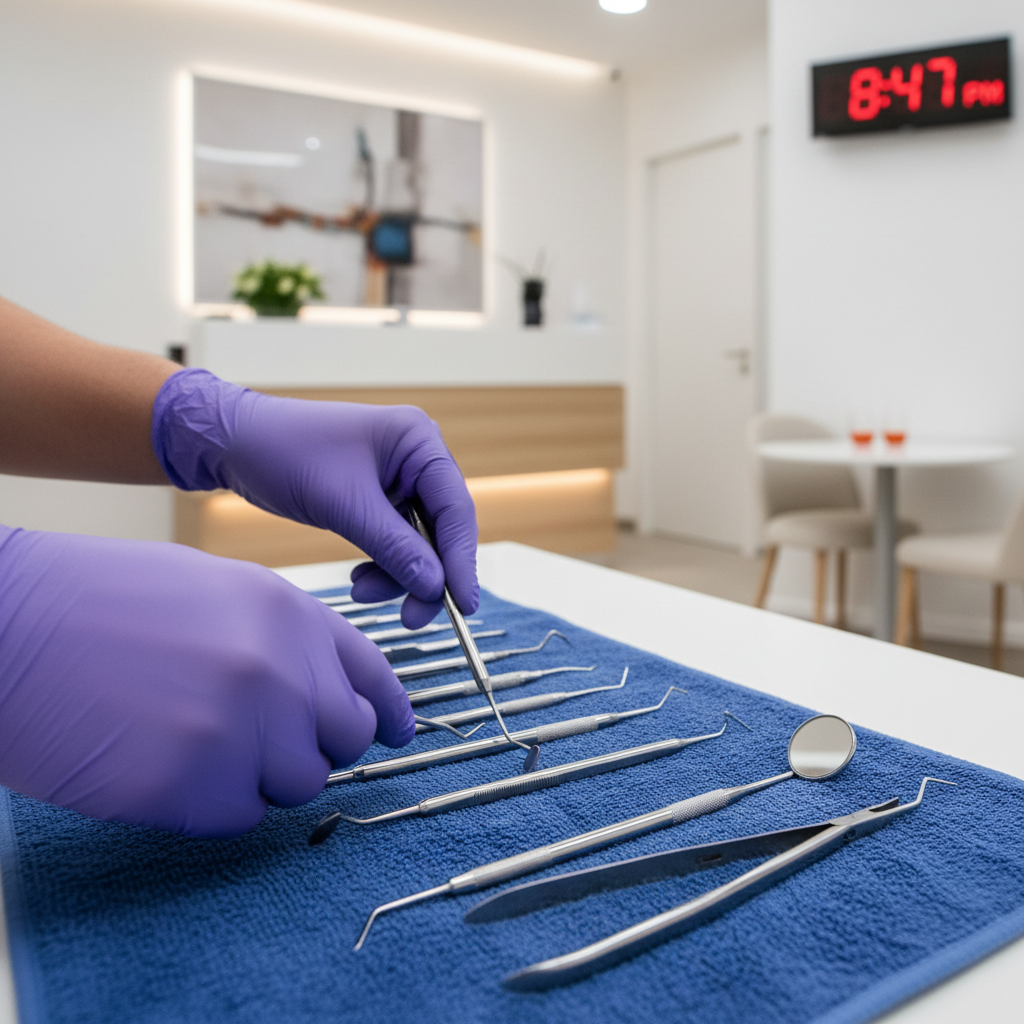


It’s 9 PM on a Sunday in Sector 35. You’ve just sat down for dinner after a long week, and suddenly—crack. A sharp, blinding pain shoots through your jaw. Or perhaps your child takes a tumble while playing cricket in the park, and you see blood on their lip and a gap where a tooth used to be.
Panic sets in. Is this serious? Can it wait until morning? Where can you find a dentist at this hour?
In moments like these, knowing exactly what to do can make the difference between saving a tooth and losing it. At Orange Dental Clinic, we understand that dental crises don’t follow a 9-to-5 schedule. This guide is your definitive resource for navigating dental emergencies in Chandigarh, helping you determine when to rush for help and when you can take a breath and schedule normally.
What Qualifies as a True Dental Emergency?
Not every toothache requires a midnight dash to the clinic, but certain symptoms demand immediate attention to stop bleeding, alleviate severe pain, or save a tooth.
A true dental emergency generally involves:
- Uncontrolled bleeding
- Severe pain that doesn’t improve with over-the-counter medication
- Trauma to the face or mouth (knocked-out or loose teeth)
- Signs of severe infection (swelling in the face/jaw, fever, trouble breathing/swallowing)
If you are experiencing any of these, do not wait. Call us immediately at +919779996266.
URGENT – GO NOW! (Immediate Care Required)
If you experience any of the following, drop everything and seek an emergency dentist in Chandigarh immediately. These situations are time-sensitive.
1. Knocked-Out Tooth (Avulsion)
This is the most critical dental emergency. You have a “Golden Hour”—typically 30 to 60 minutes—where the chances of saving the tooth are highest.
- Action: Handle the tooth only by the crown (the white part), never the root. Rinse gently with water if dirty (do not scrub). Try to place it back in the socket. If that fails, keep it moist in milk or your own saliva (inside your cheek).
2. Severe, Unbearable Tooth Pain
Pain that prevents you from sleeping, eating, or focusing is a sign of deep infection or nerve damage. It may indicate an abscess or severe decay reaching the nerve.
- Action: Rinse with warm saltwater. Do not apply aspirin directly to the gum (this causes burns). Call us immediately.
3. Abscess or Facial Swelling
An abscess is a pocket of pus caused by infection. If you notice a pimple-like bump on your gums or swelling in your cheek/jaw, the infection could spread to your neck or brain.
- Action: This is life-threatening if ignored. Seek gum abscess treatment or root canal treatment immediately.
4. Uncontrollable Bleeding
If your mouth is bleeding profusely due to trauma or after a procedure (like an extraction) and doesn’t stop after applying pressure for 20 minutes.
- Action: Apply firm pressure with clean gauze or a tea bag. Head to the clinic or emergency room if it persists.
5. Jaw Injury or Fracture
If you cannot close your mouth, your jaw looks uneven, or you suspect a break after an accident.
- Action: Use a cold compress to control swelling. Go to the nearest hospital emergency room or our clinic if dental trauma is the primary concern.
SEMI-URGENT – Within 24 Hours (Prompt Attention Needed)
These scenarios require dental trauma treatment or repair soon, but you aren’t in immediate danger of losing a tooth or facing systemic infection. Call us to schedule the next available slot.
1. Cracked or Chipped Tooth (Without Severe Pain)
If a piece of tooth breaks off but you aren’t in agony, the nerve likely isn’t exposed. However, the sharp edges can cut your tongue, and the tooth is vulnerable to infection.
- Action: Rinse with warm water. Save the broken piece if possible. Cover sharp edges with dental wax or sugar-free gum.
2. Lost Filling or Crown
While uncomfortable and sensitive to air/cold, a lost restoration isn’t usually a “midnight” emergency unless pain is severe.
- Action: You can use over-the-counter dental cement or even toothpaste to temporarily re-seat a crown (do not use superglue!). See us for dental crown/bridge repair soon.
3. Dull Toothache or Sensitivity
If the pain is manageable with medication and intermittent (comes and goes), you likely have a cavity or early infection.
- Action: Avoid hot/cold foods. Schedule a visit within the next day or two.
4. Food Stuck Between Teeth
This can be surprisingly painful but usually isn’t an emergency unless it causes gum infection.
- Action: Try to gently remove it with floss. Never use sharp objects like pins. If you can’t get it out, see a dentist.
CAN WAIT – Schedule Normally (Not an Emergency)
These situations are annoying but can wait for regular office hours.
- Mild Sensitivity: Brief twinges when drinking cold water.
- Broken Braces/Wires: Unless the wire is stabbing your cheek (cover with wax), you can wait for your orthodontist.
- Chipped Veneer: Purely cosmetic unless sharp.
- Old Nightguard Worn Out: Schedule a replacement at your convenience.
Quick Reference: Emergency Triage Table
| Symptom | Urgency Level | Action |
| Knocked-out permanent tooth | CRITICAL | Go to dentist immediately (< 60 mins) |
| Swollen face/jaw + fever | CRITICAL | Go to dentist or ER immediately |
| Severe, throbbing pain | HIGH | Call for same-day appointment |
| Broken tooth (no pain) | MEDIUM | See dentist within 24-48 hours |
| Lost filling/crown | MEDIUM | See dentist within 2-3 days |
| Bleeding gums when brushing | LOW | Schedule regular check-up |
Step-by-Step: What to Do Before Reaching Our Clinic
While you are on your way to our dental emergency clinic in Chandigarh, taking the right first-aid steps can reduce pain and improve outcomes.
While You’re On Your Way Checklist:
- Manage the Pain: Take acetaminophen (Paracetamol) or ibuprofen. Avoid aspirin as it can increase bleeding.
- Control Swelling: Apply a cold compress (ice pack wrapped in a towel) to the outside of your cheek—20 minutes on, 20 minutes off.
- Stop the Bleeding: Bite down gently but firmly on clean gauze or a wet tea bag. The tannins in tea help clot blood.
- Save the Pieces: If you have a tooth or restoration, put it in a small container with milk or saliva. Bring it with you!
- Call Ahead: Let us know you are coming so we can prepare the treatment room.
Visualizing the “Golden Hour”
- 0-15 Minutes: Keep tooth moist. Best chance of re-implantation.
- 15-60 Minutes: Survival rate drops significantly but still possible.
- 60+ Minutes: Usually requires dental implants or other replacement options as the root cells die.
Frequently Asked Questions About Dental Emergencies
Q. What if my dental emergency happens at night or on a weekend?
Dental pain doesn’t respect business hours. Call our emergency hotline immediately. We offer extended hours and weekend availability to handle urgent cases in Chandigarh.
Q. Do you accept walk-in emergency patients in Chandigarh?
Yes, we accommodate walk-ins for true emergencies, but calling ahead allows us to prepare for your arrival and minimizes your wait time.
Q. How much does an emergency dental visit typically cost?
The cost depends on the treatment required (e.g., exam + X-ray vs. emergency tooth extraction). We provide transparent pricing before starting any procedure.
Q. Can I go to a regular hospital for dental emergencies?
Only go to the ER if you have severe facial trauma (broken jaw), uncontrollable bleeding, or swelling that obstructs breathing. Most hospitals do not have dentists on staff to fix teeth; they will only give you painkillers/antibiotics and refer you to a dentist.
Q. Is a cracked tooth an emergency if it doesn’t hurt?
It falls under “Semi-Urgent.” Even without pain, the crack can deepen or get infected. See us within a day or two to prevent it from becoming a tooth pain emergency.
Q. Are children’s dental emergencies handled differently?
Yes. Children’s dentistry requires a gentle touch. If a baby tooth is knocked out, do not try to put it back in (it can damage the adult tooth underneath). Bring the child and the tooth to us immediately.
Q. What should I do with a lost crown/filling temporarily?
Clean the inside of the crown and coat it with toothpaste or denture adhesive. Gently place it back on the tooth to protect the sensitive core until you see us.
Q. How do I manage pain while waiting for treatment?
Alternate between ibuprofen and acetaminophen (if medically safe for you), keep your head elevated to reduce throbbing, and use cold compresses.
Q. What should I do if I have wisdom tooth pain?
Wisdom tooth pain often flares up due to infection (pericoronitis). Rinse with warm salt water to clean the area and schedule an appointment for evaluation.
Prevention: How to Avoid Future Emergencies
While accidents happen, many “emergencies” are actually the result of long-ignored problems.
- Wear a Mouthguard: Essential for sports like cricket, hockey, or martial arts.
- Don’t Use Teeth as Tools: Never open bottles or tear packages with your teeth.
- Regular Check-ups: Routine visits allow us to spot cracks, loose fillings, and decay before they turn into midnight pain.
Don’t wait for the pain to become unbearable. If you suspect something is wrong, reach out today.

